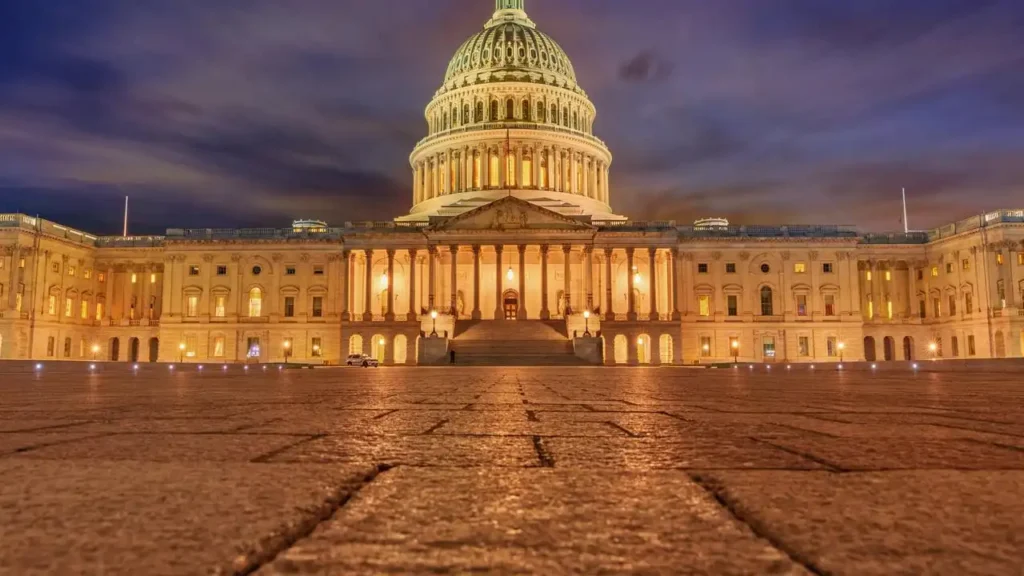
WASHINGTON — The Save America Act has moved to the center of the national political debate after House Republicans approved the legislation introducing stricter proof-of-citizenship requirements for federal elections. The bill passed on a largely party-line vote and now heads to the Senate, where its future remains uncertain.
What Is the Save America Act?
The Save America Act is legislation that would require Americans to provide documented proof of U.S. citizenship when registering to vote in federal elections. Acceptable documentation would generally include a valid U.S. passport or a certified birth certificate.
In addition, the bill would require voters to present a valid photo ID before casting a ballot. While several states already enforce voter ID laws, the Save America Act would create a federal standard for national elections.

Federal law already mandates that only U.S. citizens can vote in federal elections. However, current law does not require documentary proof of citizenship at the time of registration. Supporters say the new requirement would ensure stronger enforcement of existing rules.
Why Supporters Back the Save America Act
Republican lawmakers argue that the Save America Act is necessary to prevent noncitizens from registering or voting in federal elections. They maintain that requiring documentation would improve voter roll accuracy and enhance public trust in election outcomes.
Supporters describe the bill as a preventative measure designed to safeguard election systems rather than restrict access. They emphasize that citizenship verification is already part of federal election law and say the legislation simply adds documentation to confirm eligibility.
Concerns Raised by Critics
Opponents of the Save America Act argue that cases of noncitizen voting are extremely rare and that adding strict documentation requirements could unintentionally disenfranchise eligible voters.
Critics also highlight challenges faced by individuals whose names have changed due to marriage or other life events. While the Save America Act includes a process allowing individuals to provide additional paperwork to verify identity, opponents say implementation could be complicated and costly.
Data Sharing and Privacy Issues
Another significant component of the Save America Act would require states to share voter registration data with the Department of Homeland Security to verify citizenship status. Supporters say this would create a more uniform verification system nationwide.
However, state election officials have expressed concerns about voter privacy and the administrative burden of complying with new federal data-sharing requirements. Questions remain about how personal information would be protected and whether states would receive funding to implement the new mandates.
Implementation Challenges Before Elections
One of the major concerns surrounding the Save America Act is timing. Primary elections in several states are scheduled to begin soon, and election officials are already finalizing preparations.

Introducing new proof-of-citizenship standards would require updates to voter registration systems, staff training, public communication campaigns, and coordination with federal agencies. Some election administrators warn that making such changes close to an election cycle could lead to confusion among voters.
Senate Debate and Legislative Outlook
Although Republicans hold a majority in the Senate, the Save America Act may face procedural hurdles. Most legislation requires 60 votes to overcome a filibuster, meaning bipartisan support would likely be necessary for the bill to advance.
Some senators have indicated they are open to discussing the proposal, while others have voiced concerns about federal overreach and state authority. Under the U.S. Constitution, states are primarily responsible for regulating the “times, places, and manner” of federal elections, subject to congressional oversight.
Broader Impact on Voting Laws
The debate over the Save America Act reflects ongoing national discussions about how to balance election security with voter accessibility. In recent years, states have adopted different approaches to voter ID laws, mail-in ballots, and voter roll maintenance.
Supporters believe a standardized federal requirement would strengthen confidence in election outcomes. Opponents argue that existing safeguards are sufficient and that additional documentation requirements may disproportionately affect certain communities.
What Happens Next for the Save America Act?
The future of the Save America Act now rests with the Senate. Lawmakers will weigh concerns about election integrity, administrative feasibility, constitutional authority, and voter access before determining whether the bill moves forward.
As the midterm elections approach, the outcome of this debate could significantly influence how voter registration and identity verification are handled in federal elections. For now, the Save America Act remains one of the most closely watched pieces of election-related legislation in Washington.
Voters, advocacy groups, and election officials will continue monitoring developments as Congress considers the next steps.


Hi, I’m Hussain, the founder and content creator behind Myrol. I started Myrol with a passion for technology and automobiles. Over the years, I have closely followed smartphone innovations, automotive advancements, and global tech developments. My goal is to share clear and well-researched information with readers who want reliable updates without unnecessary hype.